Tuesday, April 18, 2017

WWI Posters

1. Propaganda is images or posters used to convince people of an ideal. They were used manipulatively and were biased on their topics.

2. Propaganda-   ideas, facts, or allegations spread deliberately to further one's cause or to damage an opposing cause 


3. Scrolled


4. This picture features the American flag and marching soldiers and a silhouette of a white man in a suit on two sides of a window. The eye is immediately drawn to the bright colors of the flag and the yellow word ENLIST and the red word YOU. These words are probably brighter than the other words because the artist wants to emphasize the need for people to enlist in the army. The dark figure inside the window represents the wrong decision and the brights colors outside represent the right decision. The flag is the main focus because it represents patriotism.

5. The flag and the soldiers outside the window represent patriotism and American pride in people.  The image is making men feel like they need to enlist to prove their pride and patriotism. The artist want people to feel motivated to join army and proud of America. This is evident in the waving flag and the bright colors of the flag.

6. This poster is aimed at young men because there are only men in the poster and they are the only ones who can officially enlist in the army.


4. This image features a man in industrial clothing and a silhouette of a soldier in the background in the same position as the worker. These two figures side by side show that they are fighting the same war, but they are contributing differently. One is at home in America working with mechanical tools and the other is abroad in battle with guns. Again, your eye is drawn the the bright colors of the American flag and the soldiers sky because they are brighter colors.

5. The artist is hoping to encourage men at home to be inspired to work just as hard as the soldiers abroad to help the US in the war. The artist is showing that the people at home are just as important and are doing important work.

6. The ideal target for this poster are the male mechanics and industrial workers not enlisted in the army because the poster features a guy working with a tool.


4. This poster features the American Red Cross and a blob of knitting thread. The word SOX is in all caps and very large font so your eyes get attracted to that word. This is to emphasize the importance of people to do what the poster is telling them to do. The knitting in the very center and enlarged is to show how much sox the army needs which is a lot. The red cross is a symbol of protection so the artist wants people to want to protect the boys at war.

5. The artist is hoping to instill a sense of being needed and duty in Americans, specifically the ones who contribute to making sox. The artist is also telling people their responsibility and that they need to be accountable.

6. This poster is probably aimed at women because they are typically protecting figures and the one who knit sox and other clothing.

7. It makes me somewhat uncomfortable that the government is spending tax money trying to manipulate myself and the rest of the country to do what they think is right or what they think we as a country need. It does not feel good to be told what to think or do.

8. The government felt the need to use propaganda during WWI because they felt that this was the only way to prove to Americans back at home that the men fighting in foreign countries need support and help from them back home. Americans back at home probably didn't;t have the perspective to understand their important role in the war effort.

Thursday, February 9, 2017

Progressive Post

We have control over our future in many ways. Our individual decisions every day dictate smaller details about our own future, but other bigger choices can affect the rest of the world. Things like recycling, a kind gesture to a stranger, or choosing to go to school are ways we have control over our future. We can make a difference in the world even if it is a small one simply by speaking our minds or writing about something we care about. Other times, we have no control over our future, because other factors are making those decisions for us. The weather, some technology, and other people are examples of things that not only we can't control, but could control us. Every choice we make in our daily lives is not placed in a vacuum where nothing can affect it as it takes place. Everyone else's choices are constantly effecting everything that happens in our lives. A great example of this is traffic. We depend on everyone on the road to make safe decisions so that we can get to where we need to be safely and on time. The government and other big institutions will in some ways play a big role in controlling the future. These organizations are made up of many people who will eventually decide together important decisions for our country dictating how our lives will be like.

Tuesday, February 7, 2017

Thinking about the Future

People were predicting that we would have moving sidewalks and pneumatic tube delivery of everything like food or newspapers. They thought airships will be invented and be flying in the sky daily. They basically envisioned the opposite of the slums in the cities and the cities will be beautiful. Boston specifically predicted that in 100 years, the city will have a morning and afternoon local newspaper. They thought the population would be between 350 and 500 million people. Life expectancy will grow because people will find a way to fight disease better and sewage and garbage would be nonexistent. They envisioned that everyone would have cars, airships sailed over the city, and moving sidewalks would make transporting giant populations easier. Smoke and noise would also disappear from cities with new ways to generate heat. This list is more of a wish list because the people of Boston live in a big city where all these new inventions would benefit their comfort in the city. Many of these things improved, but did not come true. Garbage in cities are still a huge issue and of course there are no airships yet. The trend of these things are improvement of city life in many aspects like smoke and traffic. Airships seemed like the most bizarre. People do seem to be anticipating a better future.

The Smithsonian

An civil engineer in 1900 predicted digital color photography, the height of Americans to increase,  invention of mobile phones, pre-paid meals, the population growth to decrease, hot house vegetables (faster), TV, bigger fruit, no more C, X, or Q in alphabet, and no more cars or mosquitoes. These predictions seem like a wishlist to help improve everyone's lives. The alphabet losing letters and no more cars seem to be the most bizarre and out of reach. Everything else seems reasonable or has already happened. The trends in these items are improving the health of Americans like making bigger fruit and decreasing disease and mosquitos. People are anticipating a better future by imagining these items. I think our future is going to consist of more environmentally safe transportation and machinery, and more efficient forms of energy conservation, but also some mistakes along the way that will hurt the planet and the people. The future could be better, but might also be very dark and unsafe.

BBC

Sunday, February 5, 2017

Ragtime


Urbanization and the rise of mass consumption in the late 19th century changed American lives forever in many ways. As new technology was invented, the need for human labor decreased creating an alienated term called leisure. Leisure was a brand new term for the American working class and, at first, people did not know what to do with it. (Alan Brinkley) Americans started to search for forms of entertainment and because of urbanization, industrialization, and immigration, ragtime music gained a very large audience fast. Ragtime, in its simplest form, was piano music that had syncopated or "ragged" sounding rhythms and melodies giving it a swinging feel. (The Library of Congress ) It originated from jigs or march music played and composed by African Americans. As ragtime gained popularity in the 1880s, ragtime mostly reflected stereotypical, black characters through album covers and lyrics. Ragtime in the early 1900s, however, was romanticized and less ridiculed. Piano was a very popular instrument and was kept in many households because middle class families put high value on learning to play an instrument, especially piano. The new availability of instruments and sheet music propelled ragtime into everyone's lives. Ragtime will become influential to modern composers and inspire new genres of music and dance.
jm2026.jpg
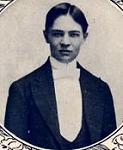
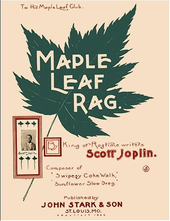
Ragtime was called “the one original and indigenous type of music of the American people” (Susan Curtis) in 1915 because it represented the patriotism and spirit of American people in the nation’s cities. Ragtime for the longest time was passed on orally and had very little opportunity to be written down. Before 1870, ragtime was mostly played at minstrel shows or accompanied song and dance, but around the 1880s,  ragtime caught the attention of white audiences and white composers began to imitate ragtime styles. (Ingeborg Harer) Pop culture was also developing alongside ragtime and was an important contributor to the growing popularity of ragtime. New, rapid developments in communications and printing technology helped develop pop culture and, in turn, helped ragtime become popular. Once this music got published, ragtime got its liftoff into the progressive lives of American people. Ben R. Harney was one of the first practitioners to bring ragtime to vaudeville shows in New York and, as an all round entertainer, he helped ragtime to spread even further to the mainstream public. A young composer who followed Harney teamed up with John Stark, a famous publisher of the time, and published his first rag Maple Leaf Rag. His name was Scott Joplin, who is known today as the King of Ragtime.
ben-r-harney-photo.jpg
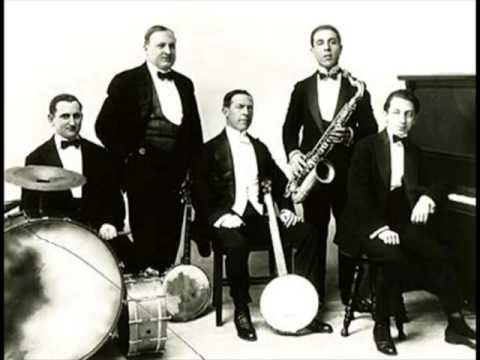
Scott Joplin was born in Texas and grew up playing piano, cornet, and singing in a quartet. He later moved to Sedalia, a city outside of St. Louis, Missouri, which was where ragtime flourished. He wrote music, played in many small ensembles, and was a member of The Maple Leaf Gentleman's Club where he wrote his most famous song. Missouri was considered the heart of America based off its geographical location just like ragtime was thought to represent the heart and soul of America. Missouri got a lot of musical attention because of the railroad hubs, thriving community of commerce and transportation, and the many travelers seeking entertainment. (Crawford, 538-546) Missouri was “The Gateway to the West” so musicians thrived there because cities like St. Louis were going through social, commercial, and cultural change which attracted a lot of people.  
hqdefault.jpg
Joplin among many other black composers struggled to get their works published because many of the big brand publishers would refuse to publish black composers. For example, Will Marion Cook, a black composer, started out studying classical violin, but found that classical music was prejudice against his race and decided to, instead, compose for shows centered around black characters where he was more successful. One of the most famous publishers of the time was civil war veteran, John Stark, who met Scott Joplin in 1899 with his unpublished song “Maple Leaf Rag”. He was one of the only publishers who ignored his prejudice and agreed to publish Joplin’s work. Because of this, John Stark and Co. actually became more successful than the other publishing companies. (Library of Congress) In only 15 years, "Maple Leaf Rag" sold over 1 million copies. Scott Joplin’s goals were to give ragtime music a salable form, expand the range of customers, and raise the status of ragtime. The only way to accomplish his goals was to get ragtime published and written down for all of America to enjoy. The new printing and distributing technology that was available at the time made this possible. John Stark and Scott Joplin were very important figures in history that helped make ragtime immortal.
170px-Maple_Leaf_Rag.PNG
It was not a surprise that ragtime caught on so fast after the first publication of ragtime music.  Americans during this time period were very spirited and energized as a whole because of the new opportunities they had due to leisure time. Ragtime was a musical representation of this energy and complimented many locations like saloons, sporting houses, ballrooms, and private homes. (Ingeborg Harer) The tunes were very catchy, foot- tapping, and humorous. What separated ragtime from all other music at the time was the unpredictable rhythms and beats. Ragtime introduced syncopation, which was the act of putting emphasis on the “weak” beats in music. Instead of the strict dance beats that put emphasis on beats 1 and 3, ragtime emphasized 2 and 4. Ragtime broke a lot of musical rules, but that was what made it so appealing to Americans. Composers brought to the stage a new sound by using syncopation, bending pitches, and exploring various vocal and instrumental sounds and techniques. For example, Scott Joplin created a unique technique in rag called “stop time” where the music stops and you just hear the musician stomping their feet to keep the beat. This premiered in his song “A Stop Time Two Step” in 1902 and later became a critical music device in Jazz and Blues music. (Jim Paterson)
frankie-manning-dancing-1.jpg
Ragtime faded in popularity around the 1920s, because of the rise of Jazz and Blues music which originated in New Orleans. Even though it was fading, many aspects of rag were still prevalent in Jazz and Blues like syncopation and stop-time. Rag was also used in many broadway shows and is the inspiration for many broadway composers today. Ragtime was even popularized in Europe when Arthur Pryor, a ragtime composer who grew up playing trombone, composed rags for John Philip Sousa’s marching band to play while they toured Europe in 1900. (The Library of Congress) Urbanization and the need for entertainment created a platform for ragtime sheet music to be a nation wide household item. Even though ragtime is no longer in our Top 100 billboard list, it changed the way people viewed black culture and created new music genres and styles we still listen to today.

Works Cited 

“Back to Nature.” University Missourian [Colombia]. Library of Congress, chroniclingamerica.loc.gov/lccn/sn89066313/1913-11-14/ed-1/seq 2/#date1=1789&sort=state&date2=1924&words=ragtime&sequence=0&lccn=&index=6&state=&rows=20&ortext=&proxtext=ragtime&year=&phrasetext=&andtext=&proxValue=&dateFilterType=yearRange&page=725.

Primary source about personal opinions about ragtime.

Berlin, Edward A. Ragtime: A Musical and Cultural History. PDF ed., University of California Press.
Gave history behind the naming of ragtime and discussed attitude towards rag.
Brinkley, Alan. A Survey American History. 12th ed., McGraw Hill Company.
Gave background and set up for ragtime. Talked specifically how urbanization contributed to the popularity of ragtime.
Crawford, Richard. America’s Musical Life. New York, W. W. Norton & Company, 2001.
Discussed specific examples of people and places that were crucial to ragtime popularity. Especially publishing companies and Scott Joplin.
Curtis, Susan. “Ragtime.” Encyclopedia of Urban America. Literati, literati.credoreference.com/content/entry/abcurban/ragtime/0?searchId=beba0eff-eb0f-11e6-a028-0e58d2201a4d&result=0.
Gave information about spirit of people and Missouri and that translating into ragtime. Gave primary quotes of people commenting on the music.
Discussed african american culture behind ragtime.
“History of Ragtime.” Performing Arts Encyclopedia. The Library of Congress, memory.loc.gov/diglib/ihas/loc.natlib.ihas.200035811/default.html.
Discussed why ragtime is different than any other music of the time. Sycopation, odd beats, etc.
Paterson, Jim. “Ragtime Music.” mfiles, Music Files, www.mfiles.co.uk/ragtime-music.htm.
Discussed the prejudice ragtime had to overcome to convince white people of its worth.
Discussed the technological advances that ragtime needed to get started.


Tuesday, December 13, 2016

Oakland Ghost Ship Fire

The Oakland Ghost Ship was a warehouse in Oakland, California that was a venue for music and art. People partied, worked, and lived in the warehouse. Artists and musicians rented studios and affordable homes in the warehouse. On December 2, a party was being held with several DJ's and rooftop dancing. Ghost Ship was not approved for the amount of people who came to the party or for people to live in.

A fire broke out in the bottom floor of the warehouse. It spread throughout the warehouse and because there was no sprinklers or fire alarms. People think a source of electricity caused the fire to happen. There were so many victims because the building broke every safety percausion. Fire alarms nearby were not heard because the music from the party was so loud. The warehouse was extremely overcrowded with all sorts of stuff like pianos, art, furniture, even mannequins. The people on the top floor had to exit using two stair cases which were far from the actual exits on the main floor. Smoke had trapped many people on the second floor. The staircases and most of the building were made of wood which basically kindled the fire. Once on the main floor, the exits were extremely hard to find and then even harder to get to because all the clutter. People had to crawl to avoid the smoke which slowed down the escape.

The Triangle Fire in 1911 is similar to Ghost Ship because both buildings were very dangerous working places. Both buildings were packed with flammable materials. The doors to the stairs were supposedly locked like how all the furniture blocked people in Ghost Ship from the staircases and exits.

http://www.eastbaytimes.com/2016/12/13/ghost-ship-fire-atf-to-address-oakland-inferno-that-killed-36/

http://www.nydailynews.com/news/oakland-ghost-ship-warehouse-deadly-fire-gallery-1.2901036?pmSlide=1.2901030

http://abcnews.go.com/US/wireStory/oakland-artists-fear-crackdown-ghost-ship-fire-44081810

Monday, November 21, 2016

Native American Research

https://www.britannica.com/art/Native-American-music

This is a database about Native American music from Brittanica Encyclopedia. This relates to the topic because it discusses how music plays a huge role in Indian culture, musical styles, and music history.

https://en.wikipedia.org/wiki/Indigenous_music_of_North_America

This source is a page from Wikipedia. This relates to the topic because it covers music history in Native American lives and also discusses gender roles in Native American music. It also relates history back to modern day music.


Native American music is a very important aspect of Indian rituals, celebrations, and culture. Each event has different genres and styles of music which belong specifically to that event. New native american music was created, but most of the time old music was just passed down generation to generation. The origin of the music usually encompassed Indian values and beliefs. Indian music was also used to continue the Indian language which might not be verbally spoken anymore. The success of each musical performance was judged by how many people got involved whether they were dancers, musicians, or audience members. The amount of people participating represented the feeling of connectedness which the Indians highly valued. Singing and percussion were prominent aspects of Indian music and what set Native American music apart from modern music today. Indians treated music as a way to educate others about their culture and also to educate their children of their own culture. Gender often played a bug role in Native american music. Most music activities leaned toward one sex. Also, Native american music have their own category in the grammies called the Native American Music Awards which is held annually.


https://www.britannica.com/art/Native-American-music


https://en.wikipedia.org/wiki/Indigenous_music_of_North_America

Wednesday, November 9, 2016

Savagery

Fran Hudson

The purpose of this activity was to read and learn about how Native Americans were viewed. We first looked up definitions of savage and savagery and then read about Native Americans in the text provided keeping the definition in mind. The definition of savage was a member of a people regarded as primitive and uncivilized, and also (of an animal or force of nature) fierce, uncontrolled, and violent.  The definition of savagery was the condition of being primitive or uncivilized.

The text portrays the Indians as animal-like, inhumane, and uncivilized. It is obvious they live very different to how Americans live. The text would shift the way I viewed Native Americans in a negative way because their morals and way of life was so different from ours. They value war and consider fighting in wars to be honorable. They were extremely revengeful and even burned their prisoners alive. They weren't very technologically advanced, living in huts and wearing very little clothing. They didn't even have books or a clear language they spoke. The text was supporting the idea that Native Americans were savages because they appeared uncivilized, cruel, and violent. By using "the savages" the text sets the Native Americans apart from the rest of us. This text would shift all American student's views on Native Americans very convincingly.